

Last week, I spent four days in Las Vegas walking two completely different conferences at the same time. HIMSS on one side. Enterprise Connect on the other.
For anyone who doesn't know, HIMSS is the big healthcare technology event. Nearly 30,000 people. Massive show floor. Every major health system, digital health company, and EHR vendor you can think of. Enterprise Connect is the enterprise communications world. Voice platforms, collaboration tools, contact center infrastructure. That's the world I came from. Twenty-plus years building voice and telecom technology at Voxeo, Tropo, and Plum Voice.
Both shows used to be in Orlando. This was the first year they were both in Vegas. A little bittersweet since Orlando is home for us. But the world goes on and having them in the same city the same week made for an interesting experiment.
Walking both floors in the same week was genuinely clarifying. And a little surreal.
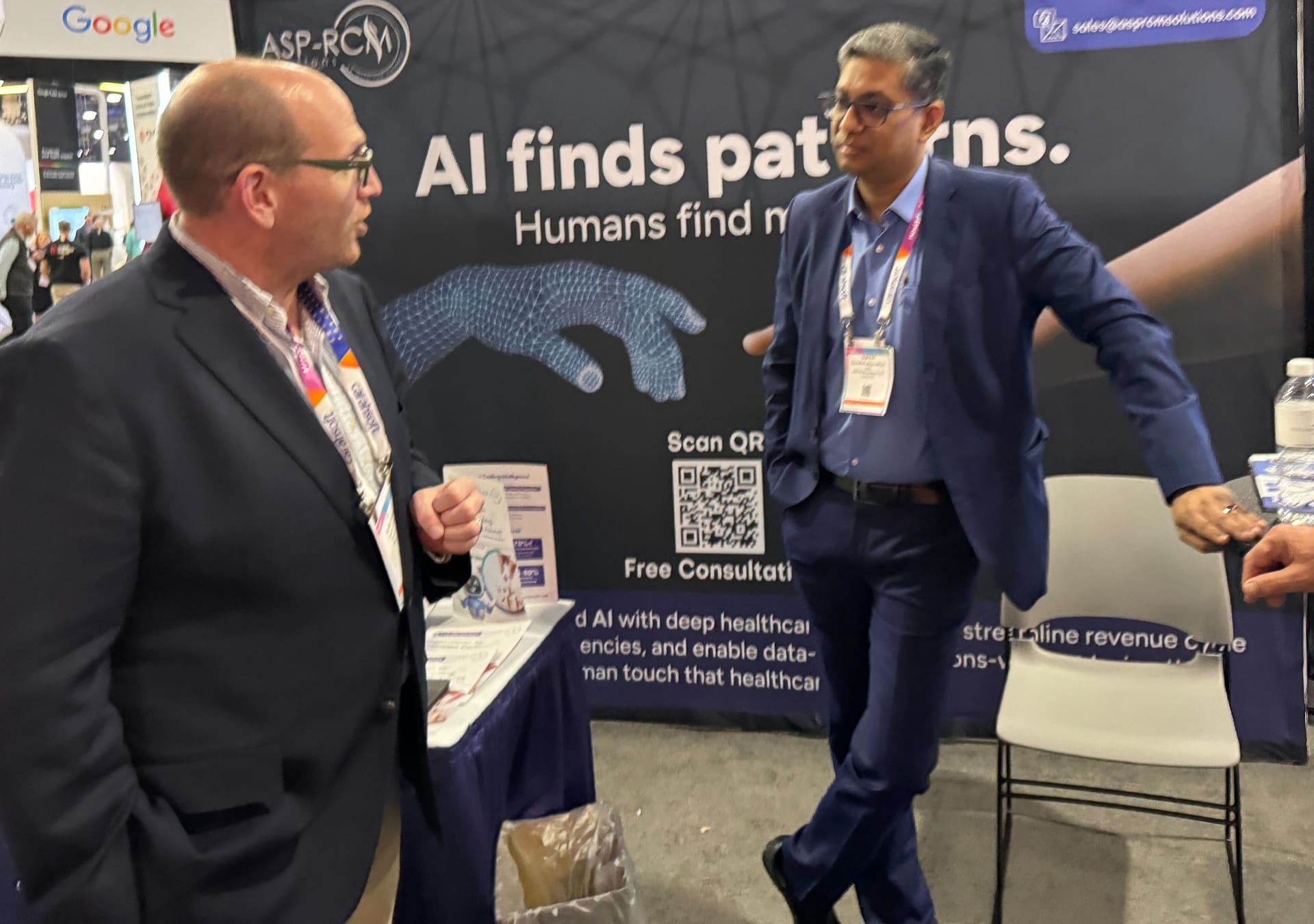
The EC Side: Familiar Faces, Smaller Room
I'll be honest. Enterprise Connect was bittersweet this year.
Both EC and HIMSS used to be Orlando shows. That mattered to us since Orlando is Consig's home base. This was the first year both moved to Vegas and you could feel the difference. EC was noticeably smaller than in past years. Some of the old names weren't there. The hallway conversations were still great but the energy of those packed Orlando shows wasn't quite the same.
That said, Enterprise Connect is still my world. I've been going to that show or its predecessors for most of my career. The people building CPaaS platforms, voice infrastructure, conversational AI. I know many of them. We built some of this industry together.
The conversations were good. Everyone is feeling the acceleration. AI is compressing timelines that used to take years into months. The tooling is better. The models are better. The gap between a demo and something that actually works in production is closing fast.
But here's what I kept hearing: nobody has cracked healthcare. The enterprise communications world has incredible technology for voice automation, intelligent routing, real-time transcription. And yet healthcare remains one of the hardest environments to deploy any of it in.
The reason is structural. In most industries, phone communication is centralized. You have a contact center. You have agents. You have a system. Healthcare doesn't work that way. The calls are scattered everywhere. The nurses' station. The front desk. The back office. The care coordinator working off a spreadsheet. Billions of patient calls every year happening across thousands of disconnected touchpoints, made by nurses and care teams who should be doing clinical work, not playing phone tag. There's no single place to plug in a solution because the problem isn't centralized. That's what makes healthcare voice so much harder than anything the enterprise communications world is used to.
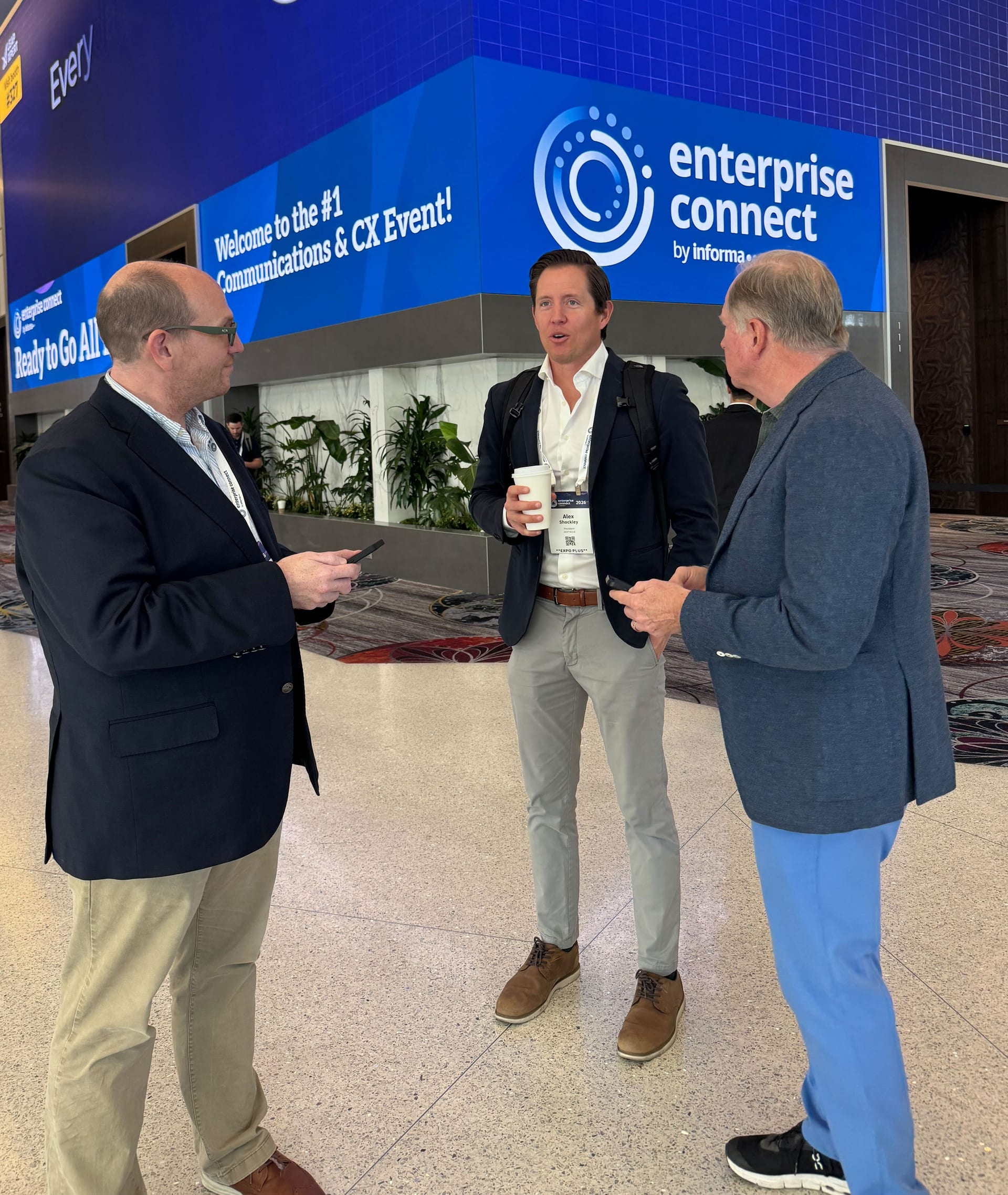
The HIMSS Side: A Different Kind of Problem
I last attended HIMSS in Chicago a few years ago and I remember being struck by the sheer scale. It too was relocated to Vegas from Orlando, but in this case, the move seems to have just unleashed more growth. This time I came in with more context and more specific conversations to have.
When it comes to voice communication, the challenges healthcare organizations are dealing with are not subtle. Patient engagement is broken at scale. Staff are overwhelmed. Follow-up calls don't happen because there aren't enough people to make them. Appointment reminders, care coordination, chronic care management outreach. The volume is enormous and the tools most organizations have are manual processes held together with spreadsheets and good intentions.
What stood out to me across dozens of conversations: healthcare doesn't need another point solution. They need infrastructure. Something that can handle high-volume outreach, stay compliant across a patchwork of regulations, and plug into the platforms they already use.
That's not a technology problem. It's a packaging problem.
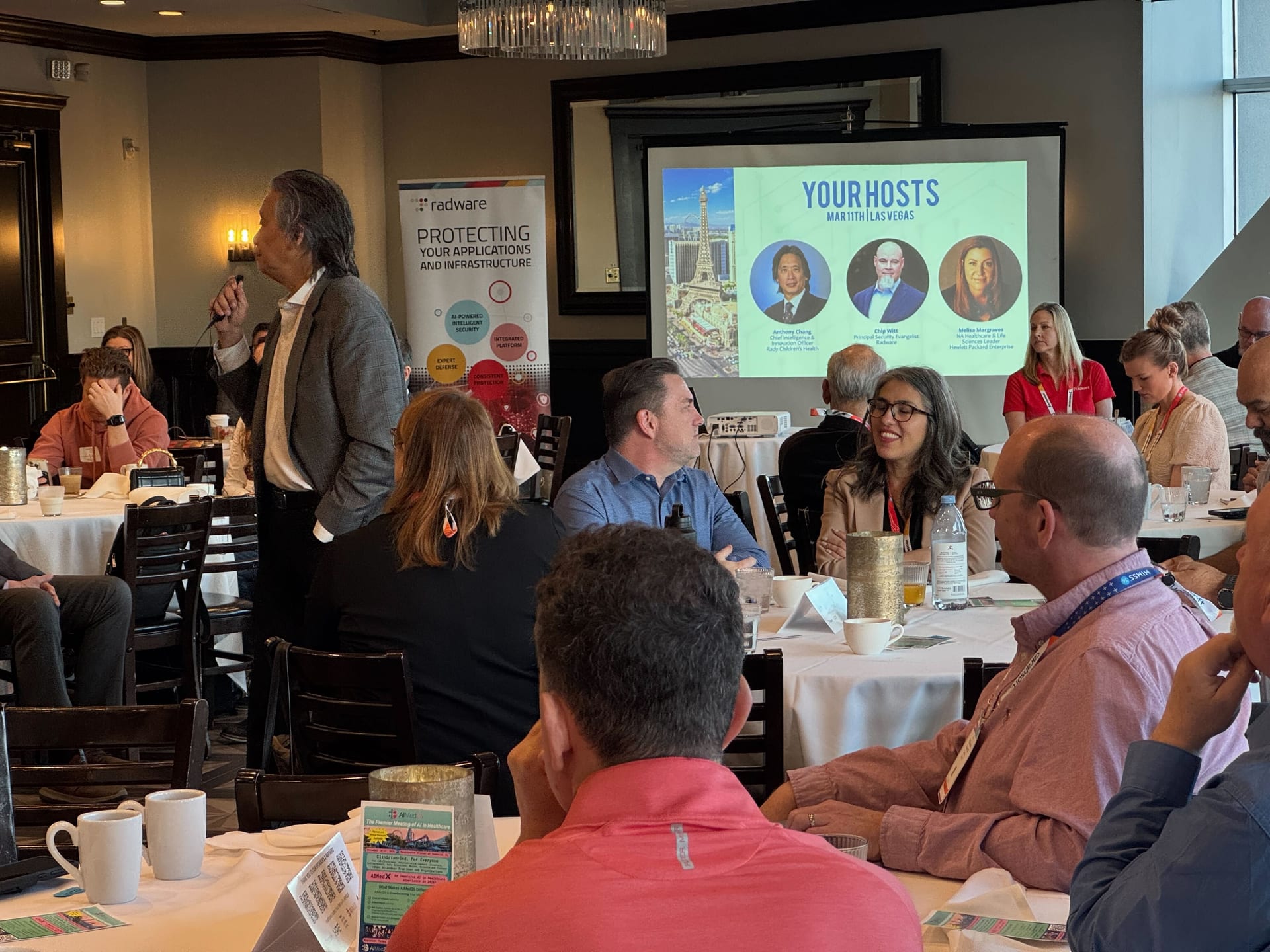
Where These Two Worlds Meet
This is exactly what we're building at Consig. We handle over a million patient outreach calls a year in production. Not demos. Not pilots. Real calls to real patients every day.
The reason it works is that we sit at the intersection of these two worlds. The voice and telecom expertise from my Enterprise Connect life. The healthcare domain knowledge, compliance requirements, and operational reality from the HIMSS side.
HIPAA, TCPA, state-by-state AI disclosure laws, carrier registration, consent tracking, call recording rules. That's the friction. And that friction is exactly why most voice AI companies struggle to get from a working prototype to something that actually operates at scale in healthcare.
We built our compliance engine into the architecture from day one. We didn't bolt it on after the fact. That choice cost us speed early on but it's the reason we can do what we do now.
The Real Takeaway
The insight I keep coming back to from this week is simple. The technology for intelligent voice communication exists. The healthcare need is massive and growing. But the gap between those two things isn't a technology gap. It's a friction gap.
Compliance. Telecom complexity. Integration with healthcare workflows. Patient verification. Consent management. These aren't glamorous problems but they're the ones that actually matter if you want to operate in this space.
The companies that will win in healthcare AI are the ones willing to do the hard, unglamorous work of building through the friction. Not around it.
What's Next
We came back from Vegas energized. New partnerships taking shape. Conversations with healthcare platforms and BPOs that see the same thing we see. The demand for scalable, compliant patient outreach infrastructure is only growing.
If you're building in healthcare and thinking about how to scale patient communication without adding headcount, I'd love to talk. We're always looking for partners who want to solve this problem the right way.


